
Why Portable Power Makes More Sense Than Fixed Electrics for Camping Trailers
Modern camping trailers don’t need complex fixed electrical systems. This article explains why high-capacity portable power stations often offer a safer, more flexible, and more future-proof solution for off-grid camping — especially in modular trailer builds.
When designing a modern camping trailer, one of the most important decisions is how to handle off-grid power. Traditionally, campervans and caravans rely on fixed electrical systems — leisure batteries, permanent wiring, and hard-installed components. But for camping trailers, especially modular and family-focused setups, portable power stations increasingly make far more sense.
In this article, we explain the difference between fixed electrics and portable power, compare them in real-world use, and explain why Campform designs its trailers around high-capacity portable power solutions rather than permanent electrical installations.
What Are “Fixed Electrics” in Camping Setups?
Fixed electrical systems are what most people associate with campervans and caravans. They typically include:
Permanently installed leisure batteries
Hard-wired 12V and 230V circuits
Built-in chargers, inverters, and fuse boards
Fixed sockets, lights, and appliances
These systems are usually installed once and expected to remain in place for the life of the vehicle.
While this approach works well in large campervans designed for long-term touring, it brings compromises — particularly when applied to smaller, modular camping trailers.
What Is Portable Power?
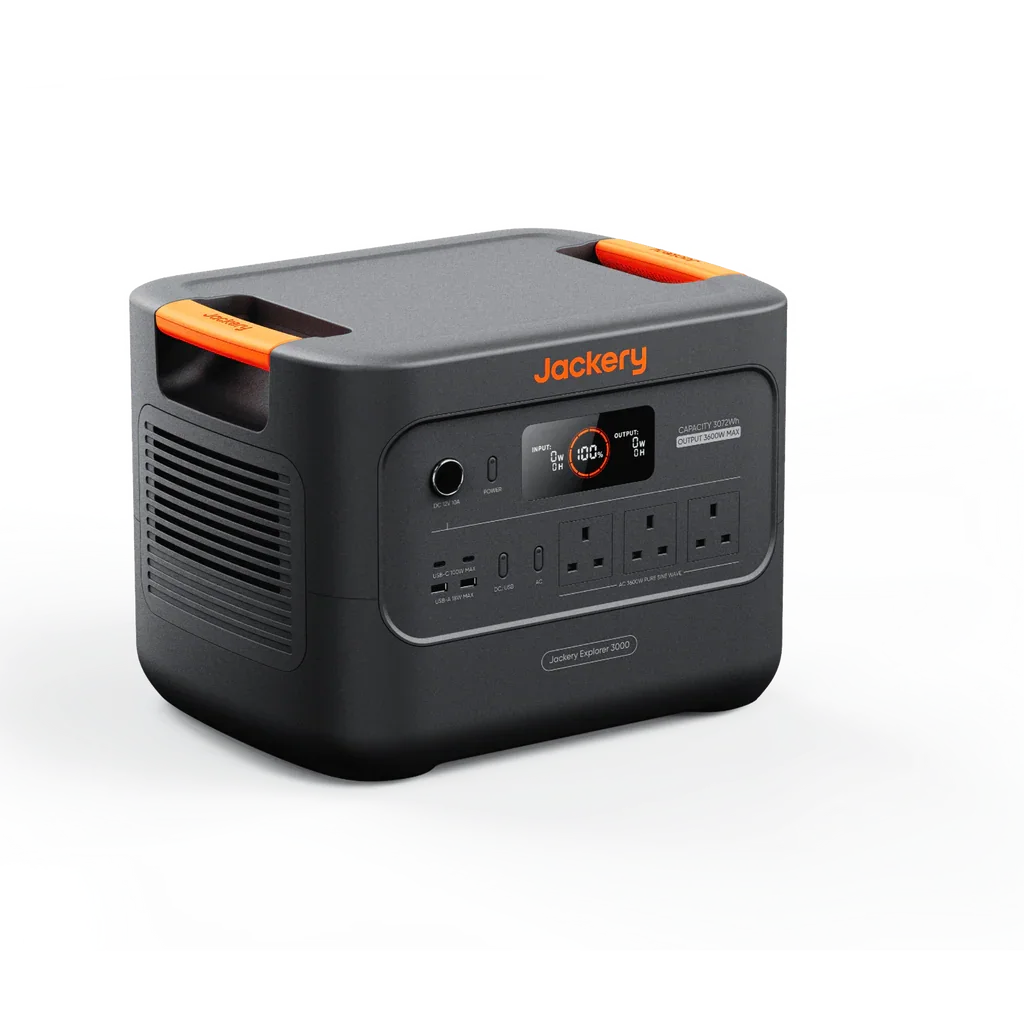
Portable power stations combine battery storage, inverter, charging electronics, and safety systems into a single self-contained unit.
Modern portable power solutions offer:
High usable capacity for multi-day off-grid stays
Multiple output types (USB, 12V, 230V)
Fast charging from mains, vehicle, or solar
Built-in battery management and safety protection
Crucially, they are removable, upgradeable, and adaptable to different uses — which makes them ideal for camping trailers.
Fixed Electrics vs Portable Power: Real-World Comparison
Installation & Complexity
Fixed electrics require:
Professional installation
Permanent wiring
Ventilation planning
Ongoing fault-finding
Portable power requires:
No permanent wiring
No specialist installation
Simple plug-and-play integration
For trailer builds, simplicity matters. Fewer permanent systems mean fewer failure points and faster builds.
Cost & Value
Fixed electrical systems can be expensive once installation, components, and labour are included — especially if future upgrades are needed.
Portable power:
Has a clear upfront cost
Can be upgraded without re-wiring
Retains resale value independently of the trailer
For many users, this results in better long-term value.
Flexibility & Modularity
Fixed systems are locked in. If your camping style changes, the electrics don’t.
Portable power:
Can be removed and used at home or in a tent
Can be upgraded as battery technology improves
Allows trailers to evolve with the user
This flexibility is central to Campform’s modular design philosophy.
Safety & Reliability
Permanent electrical systems rely heavily on correct installation and ongoing maintenance.
Modern portable power stations:
Include built-in protection systems
Are factory-tested as complete units
Reduce the risk of wiring faults or user error
For family camping, reliability and safety are non-negotiable.
When Fixed Electrics Do Make Sense
Fixed electrics aren’t inherently bad — they’re just not always the right solution.
They make sense when:
The vehicle is a full-time campervan
The layout is fixed and unlikely to change
There is space for permanent installation
The user wants a traditional caravan-style setup
Campform trailers are designed for a different type of user — one who values adaptability over permanence.
Why Portable Power Works Better for Camping Trailers
Camping trailers sit in a unique space between tents, caravans, and campervans. They need to be:
Lightweight
Easy to store
Simple to tow
Adaptable to different trips
Portable power supports all of these goals. It allows trailers to remain clean, uncluttered, and modular, while still offering serious off-grid capability.
Rather than designing a trailer around an electrical system, Campform designs the electrical solution around how people actually camp.
The Campform Approach to Power
At Campform, we design our trailers to work with approved high-capacity portable power solutions that have been tested for real-world camping use.
This approach allows customers to:
Start with a simple setup
Upgrade capacity over time
Avoid complex electrical installs
Use the same power solution across multiple scenarios
It also ensures that power remains a feature, not a constraint.
Choosing the Right Power Setup
The best power solution depends on:
How long you camp off-grid
What appliances you use
Whether you camp year-round
How modular you want your setup to be
For most camping trailer users, portable power offers the best balance of performance, simplicity, and future-proofing.
Final Thoughts
Fixed electrics have their place — but for modern camping trailers, portable power makes more sense.
It’s safer, more flexible, easier to upgrade, and better aligned with how people actually camp today. That’s why Campform builds trailers around modular power solutions that adapt as technology — and your adventures — evolve.
If you’re exploring a custom camping trailer or upgrading an existing setup, understanding your power options is one of the smartest places to start.